
Early in my homeschool days, one of the leaders of our homeschool group encouraged the families with young children to take time off from academic types of learning in the month of December.
If you’re anything like I was, that seems like bad advice considering that our kids are seemingly SO 'behind'. See why I put 'behind' in quotes here. Spoiler: Your kids aren't behind!
If you’ve been around here for any length of time, you’ve probably heard me talk about how I constantly worried about the vast amount of time my children played during our early homeschool years.
You can probably imagine that with eight children, seven with dyslexia and ADHD, and only one teacher, there was a lot of downtime for my kids.
Well I am here to say that 30 years later, with seven of my eight kids graduated from homeschool high school, I didn’t need to worry after all. In fact, just as that wise homeschool leader said, those playing and non-academic activities have been some of the highlights of my kids' homeschool experiences.
With that in mind, I'm sharing today some simple ways your kids are learning while you enjoy the holiday season.
1. Holiday Read-Alouds (With ZERO Pressure to Decode)
Reading aloud is one of the most powerful tools you have for a dyslexic learner. It builds vocabulary, language comprehension, background knowledge, and attention — even if your child isn’t doing the reading.
Choose:
- winter or holiday stories
- funny family novels
- short chapter books
Not sure what to read? Check out these lists of Christmas books from Read Aloud Revival.
Tip: Light candles, give everyone hot cocoa, and call it “family reading time.” It’s cozy, connected, and deeply educational.
2. Audiobooks for Quiet Mornings, Busy Afternoons, or Car Rides
Audiobooks give dyslexic learners access to rich, age-appropriate stories without the frustration of decoding.
Try:
- The Best Christmas Pageant Ever
- The Lion, the Witch, and the Wardrobe
- The Vanderbeekers of 141st Street
No tapped into audiobooks yet? See this list of the best audiobook resources.
Audiobooks calm the house, entertain during travel, and keep literacy skills growing.
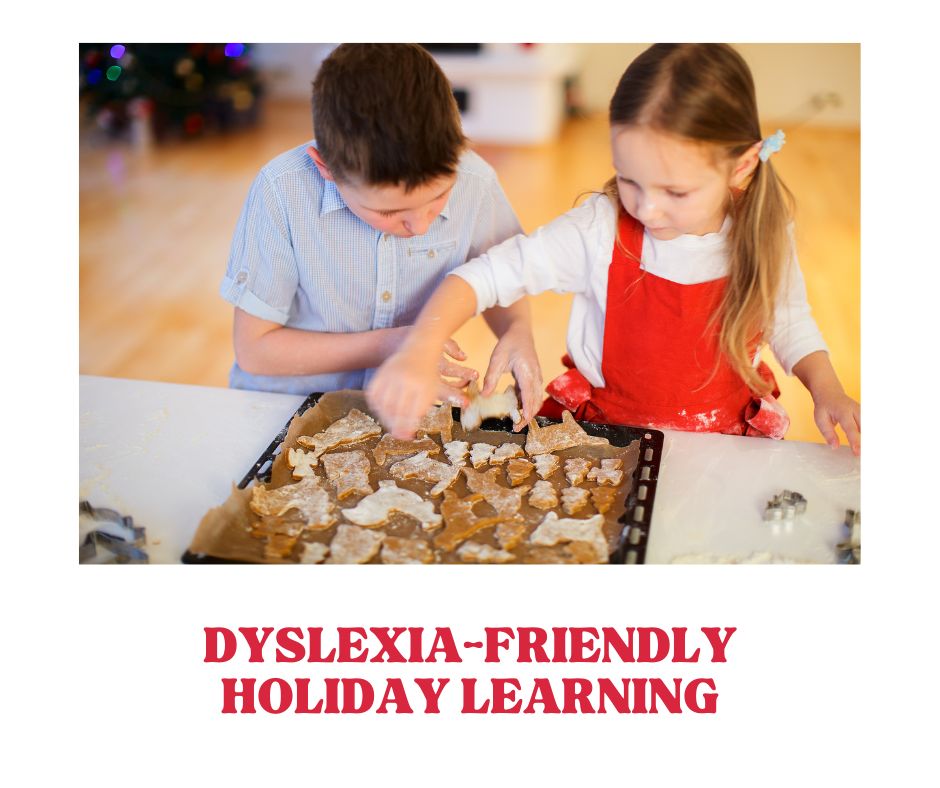
3. Baking = Practical, Hands-On Math
Holiday baking is a goldmine for everyday learning:
- Fractions
- Measuring
- Sequencing
- Following directions
- Executive function skills
Let your child measure ingredients, read the recipe steps aloud, or set timers.
This is real learning — and delicious. Our family would put together plates of cookies and treats and deliver them to our neighbors as well!
4. Board Games That Build Executive Function
Executive function skills (EF) — planning, working memory, flexible thinking — are often tricky for kids with dyslexia and ADHD. Games build EF without feeling like practice.
Great options:
- Ticket to Ride
- Qwirkle
- Uno
- Blokus
- Rush Hour
For more of my favorite games for building executive functions, click here.
Even simple games like Memory, Go Fish, or Connect Four strengthen working memory and strategic thinking.
5. Scavenger Hunts (Indoor or Outdoor)
A dyslexia-friendly twist:
- Give clues verbally, not in writing
- Use picture-based lists
- Include sensory elements (find something soft, something cold, something red)
Have an older child create simple scavenger hunts for the younger kids. This builds leadership for the older kids and vocabulary, direction-following, and attention skills for the younger ones.
Here's an article on how to set up a scavenger hunt for kids.
6. Crafting and Hands-On Activities
Crafts support motor skills, sequencing, spatial reasoning, and creativity.
Try:
- ornament making
- watercolor painting
- gingerbread houses
- paper snowflakes
- simple sewing projects
Let kids choose their materials — autonomy reduces resistance.
7. Family Movie Nights With Follow-Up Discussion
Movies help build:
- comprehension
- prediction skills
- emotional awareness
- storytelling structure
After the movie, ask:
- “Who changed the most in the story?”
- “What problem did they solve?”
- “How did the characters feel at different moments?”
This trains narrative thinking — essential for reading comprehension.
Here's a list of family-friendly Christmas movies from Common Sense Media.
8. Nature Walks + Conversation
Bundle up and go for a walk.
Talk about:
- winter changes in plants and animals
- textures and temperatures
- observation skills
Conversation is literacy. Kids build vocabulary through natural dialogue.
9. Serving Others as Learning
Acts of service develop empathy, emotional regulation, and planning skills.
Ideas:
- bake cookies for neighbors
- make cards for a nursing home
- help wrap gifts for a charity
This builds confidence and connection — two things all learners desperately need.
10. Free Play — Yes, It Counts
Unstructured play supports:
- creativity
- problem-solving
- social skills
- emotional resilience
During the holidays, kids’ brains need recovery time. Free play is not wasted time — it’s how children integrate everything they’ve been learning. My kids often would act out scenes from the books we read or movies we watched.
A Reminder for Parents
December is not the month to worry about falling behind.
It’s the month to:
- rest
- reconnect
- restore routines slowly
- create memories
- observe your child’s strengths
- enjoy learning in a gentler, more natural way
Honestly, when you get back to school in January, the kids will be rested and may even feel ready to get back to the regular routine.
More Resources


0 Comments