
One of the greatest benefits of homeschooling—especially when you’re homeschooling a child with dyslexia—is freedom.
Freedom from rigid timelines.
Freedom from comparison.
Freedom from teaching the same way schools teach.
And yet… many homeschool families never fully use that freedom.
Why?
Because most of us only know traditional school and lack the confidence to step outside of that model.
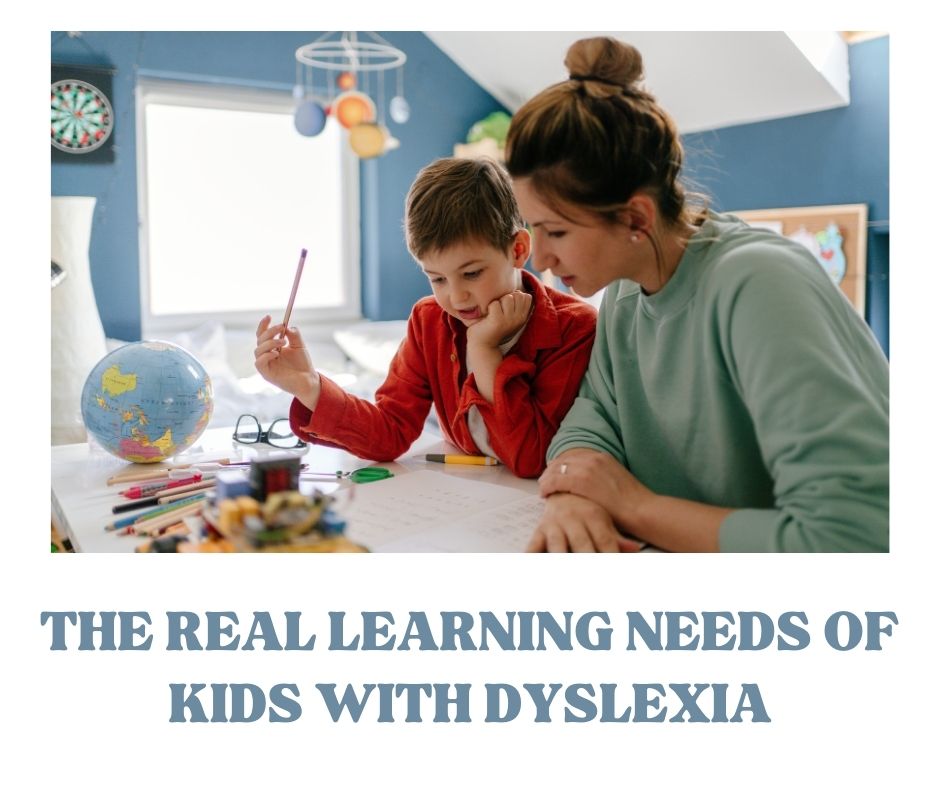
Why Homeschooling a Child With Dyslexia Requires a Different Approach
Even after leaving the school system, many parents still plan their homeschool through a school-shaped lens:
- How do I get my child caught up?
- How do I fix what they’re behind in?
- How do I help them learn this the “right” way?
These questions make sense—especially if your child struggles with reading, writing, or spelling.
But they quietly assume something that isn’t true.
Dyslexia is not a delay that needs fixing.
It is a learning difference that requires a different approach.
When planning starts with the goal of making a dyslexic child learn like a traditional learner, frustration is almost guaranteed—for both parent and child.
Dyslexia Is a Learning Difference—Not a Learning Deficit
Children with dyslexia:
- process language differently
- often develop skills on a non-linear timeline
- show strong abilities in areas like reasoning, creativity, big-picture thinking, and problem-solving
- need explicit, structured instruction in reading and writing alongside accommodations
This means their real educational needs often don’t match:
- grade-level expectations
- standardized pacing
- conventional school priorities
And that’s okay.
Homeschooling allows you to teach to the child in front of you, not to an external benchmark.
But only if you truly understand what your child needs right now.
The Most Common Mistake Parents Make When Planning for Dyslexia
Many homeschool plans fail—not because parents aren’t trying hard enough—but because they start with the wrong priorities.
Parents often plan around:
- what their child should be doing
- what they think comes next
- what they’re afraid their child might miss
Instead of:
- how their child actually learns
- which skills are developmentally appropriate now
- what will support long-term growth and confidence
When you don’t clearly understand your child’s real needs, planning becomes reactive:
- chasing gaps
- switching curriculum
- adding more time
- pushing harder
And everyone gets tired.
How to Identify Your Child’s Real Learning Needs at Different Ages
One of the most freeing things parents learn is this:
It's okay to completely switch your child's learning to what their brains need.
Learning needs for kids with dyslexia change dramatically from season to season and often don't look like anything like traditional models of learning.
Priorities in learning vary for:
- an elementary-age dyslexic learner
- a middle schooler who is resisting school
- a high schooler preparing for adulthood
Knowing what to prioritize—and what can wait—is one of the biggest missing pieces for homeschooling families.
And it’s something traditional school rarely teaches parents how to do.
A Simple Exercise to Reveal Your Child’s Real Needs
Here’s a quick but meaningful exercise you can do today:
Ask yourself:
“Where does my child struggle because of how they learn—not because they aren’t capable?”
This question reframes everything.
It helps you see:
- where accommodations may be needed
- where explicit instruction matters most
- where pressure can be released
- where strengths may have been overlooked
Many parents feel immediate relief when they stop viewing struggles as personal failures—and start seeing them as information.
Understanding Your Child’s Real Priorities Changes Everything
One of the most important things I help parents see—especially parents homeschooling kids with dyslexia—is that priorities are not universal.
What your child truly needs at each stage of development may look very different from:
- traditional school expectations
- grade-level standards
- what worked for another child
- even what worked for your own child a year or two ago
When parents don’t understand how dyslexia shapes learning, planning often becomes reactive:
trying to catch up, trying to fix, trying to push forward faster than a child is ready.
What I do instead is help parents identify their child’s unique learning priorities—the things that matter most right now for growth, confidence, and long-term success.
When parents understand:
- how their child learns differently
- which skills need direct support
- which struggles are developmental—not failures
- and which strengths should be protected and built
they’re able to set priorities that are realistic, effective, and sustainable.
Realistic Priorities Build Confidence—for You and Your Child
When priorities are aligned with how a dyslexic child actually learns, something powerful happens.
Parents feel:
- more confident in their decisions
- less guilt about what they aren’t doing
- calmer and more grounded in their homeschool
And children feel:
- capable instead of “behind”
- smart instead of broken
- successful instead of constantly struggling
Progress still happens—but it happens in ways that make sense for the child.
About “Catching Up” (This Matters)
Here’s something I’m always honest about with parents:
Children with dyslexia do learn—and they do make progress—but rarely on the timeline parents expect.
That doesn’t mean they won’t catch up in meaningful ways.
It means their learning curve looks different.
When parents understand this, they stop:
- measuring success by short-term benchmarks
- panicking when progress isn’t linear
- mistaking a slower pace for lack of ability
Instead, they learn how to:
- prioritize foundational skills when needed
- allow time for skills to solidify
- trust long-term growth over short-term pressure
This shift alone can completely change the emotional climate of a homeschool.
Why I Teach Planning This Way
Homeschool planning for kids with dyslexia isn’t about doing more or pushing harder.
It’s about:
- knowing what matters most at each stage
- setting priorities that fit your child—not a system
- creating conditions where learning feels possible again
When parents understand their child’s real needs, planning becomes less about control and more about clarity.
And clarity is what allows both parents and kids to move forward with confidence.
Rebooting Isn’t About Doing More—It’s About Doing What Matters
Homeschooling a child with dyslexia isn’t about catching up to someone else’s timeline.
It’s about:
- teaching in ways that work
- honoring your child’s pace
- prioritizing what truly matters at each stage
A homeschool reboot isn’t a reset because you failed.
It’s a reset because your child is growing—and their needs are changing.
And when you understand those needs clearly, planning becomes far more peaceful—and far more effective.
Let me Help You Reboot Your Homeschool
This is exactly the work I do with parents inside my Reboot Your Homeschool Planning Class. I help parents step out of school-based expectations and learn how to identify the right priorities for their child with dyslexia—priorities that support real progress and protect confidence.
Together, we look at how dyslexic kids learn at different ages, what truly matters most in each season, and how to plan in a way that helps children feel capable, smart, and successful while they grow at their own pace.
The goal isn’t to rush learning or force a timeline—it’s to create a homeschool that works with your child’s brain, so progress happens steadily and sustainably, even if it doesn’t look the way you originally expected.
This class is for parents who know their child is capable but want clearer priorities for homeschooling with dyslexia. If you’re ready to stop guessing, stop comparing, and plan in a way that fits how your child actually learns—so progress feels real and confidence stays intact—this class is for you.
Get access to the replay of our most recent Reboot Your Homeschool Workshop with Reboot LITE. In 2-hours you will know what your child's unique priorities are for this semester.
Have you learned to let your child with dyslexia learn at their own pace? Share how in the comments below!



0 Comments