
For many children with dyslexia and ADHD, learning is not just academically challenging, it is emotionally demanding. This is where Social-Emotional Learning (SEL) becomes essential, especially for homeschooling families.
If your child melts down over schoolwork, shuts down emotionally, or becomes overwhelmed by what seems like a small task, you’re not dealing with a character issue or a lack of motivation.
You’re likely dealing with emotional overload.
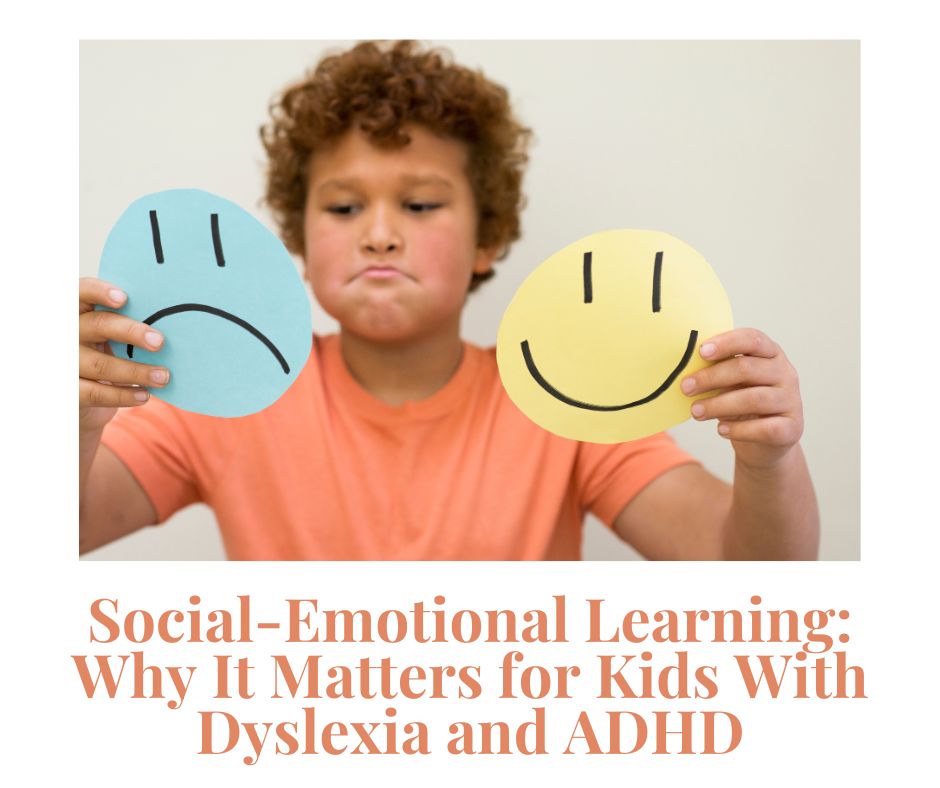
What Is Social-Emotional Learning (SEL)?
Social-Emotional Learning (SEL) refers to the skills children use to:
- Understand and name their emotions
- Manage frustration, stress, and disappointment
- Recover after emotional overload
- Build confidence and self-awareness
- Navigate expectations and relationships
In simple terms:
SEL helps children manage what’s happening inside them so learning can happen outside of them.
Many children develop these skills gradually through life experience. Children with dyslexia and ADHD often need more intentional support, because learning itself requires more effort and creates more stress.
Why SEL Matters So Much for Kids With Dyslexia and ADHD
Children with learning differences live with a level of invisible pressure that often goes unnoticed:
- Reading, writing, and organizing take more energy
- Instructions are harder to process and remember
- Time pressure increases anxiety
- Mistakes happen more often
Over time, this can lead to:
- Emotional outbursts
- Avoidance or shutdown
- Resistance to starting work
- Perfectionism or fear of failure
- Low confidence and negative self-talk
These reactions are often misread as behavior problems but in reality, they are stress responses.
SEL helps reduce the emotional load that builds up around learning.
Why Emotional Regulation Is an Academic Skill
When a child becomes emotionally overwhelmed, their brain shifts into survival mode. In that state:
- Working memory drops
- Focus disappears
- Language processing slows
- Reasoning and flexibility shut down
That’s why a child who knows the material can suddenly seem incapable.
For kids with dyslexia and ADHD:
Emotional regulation is an academic skill.
You can have excellent curriculum and instruction, but if a child is emotionally dysregulated, learning will not stick.
How Teaching SEL Looks in a Homeschool Environment
SEL does not require a separate program or formal lessons. In many homeschooling families, it is woven into daily life.
SEL often looks like:
- Talking openly about emotions
- Normalizing frustration during hard tasks
- Teaching children what to do when they feel overwhelmed
- Adjusting expectations during emotionally heavy seasons
- Helping children recover after hard days instead of pushing through
Homeschooling provides a unique opportunity to support SEL naturally, in real time, during real challenges.
How to Help Your Child Learn SEL at Home
SEL skills are learned through experience, modeling, and repetition, not lectures. Small, consistent practices are far more effective than big explanations.
Here are five simple ways to teach SEL at home.
1. Teach Emotional Awareness by Naming Emotions
Many children struggle to regulate emotions because they don’t yet know how to identify them.
Model emotional language throughout the day:
- “That looks frustrating.”
- “This feels overwhelming.”
- “I feel that way sometimes too.”
Naming emotions helps calm the nervous system and reduces escalation. Over time, children begin to use this language themselves which is the first step toward self-regulation.
2. Plan Breaks Before Frustration Explodes
Meltdowns often happen because a child’s nervous system is already overloaded.
Instead of waiting for frustration to peak, build in planned breaks, such as:
- Short movement breaks
- A snack or water break
- Going outside
- Quiet time
Planned breaks teach children that pausing is part of learning, not a failure.
3. Create a Simple Reset Plan Together
When emotions run high, children often don’t know what to do next.
Ask your child:
“What helps you calm down when school feels too hard?”
Create a short list together, such as:
- Take a break
- Move your body
- Sit quietly
- Get a hug
Write it down and keep it visible. This teaches children that big emotions are manageable and that there is a plan for hard moments. This HUGE. A big part of our role as parents of kids who learn differently. Teaching them how they learn and what they need to learn best will help them as they move into the world as adults.
4. Adjust One Expectation to Reduce Emotional Pressure
Sometimes the most powerful SEL support is lowering emotional load.
Choose one area to temporarily lighten:
- Shorten lessons
- Reduce written output
- Provide more modeling or support
Adjusting expectations is not lowering standards. It creates emotional safety so learning can continue.
5. End the Day With Emotional Recovery
SEL doesn’t end when school ends.
After a hard learning day, prioritize:
- Connection
- Calm activities
- Emotional safety
Avoid rehashing mistakes late in the day. Children learn better tomorrow when today ends feeling safe and settled.
What SEL Gives Your Child Long-Term
SEL helps children learn:
- “Hard doesn’t mean impossible.”
- “I can pause and recover.”
- “Struggle doesn’t define me.”
These skills support not only academic learning, but resilience, confidence, and emotional health for life.
How Social-Emotional Learning Connects to Executive Function
Social-emotional skills don’t exist in isolation.
For children with dyslexia and ADHD, SEL and executive function (EF) are deeply connected.
Executive function skills include:
- Starting tasks
- Managing frustration
- Staying focused
- Regulating emotions
- Shifting attention
- Following through when something is hard
When executive function is weak, emotional regulation is often affected and when emotions overwhelm the nervous system, executive function shuts down even further.
Going Deeper: Support Executive Function at the Root Level
If emotional overwhelm, shutdowns, resistance, or inconsistent performance are common in your homeschool, it’s often a sign that executive function skills need support.
I’m releasing a brand new master class this week called: Executive Function at Home: What’s Really Going On and What Actually Helps
In this class, parents learn:
- What executive function really is (and what it’s not)
- Why kids with dyslexia and ADHD struggle with EF skills
- How emotional regulation fits into executive function
- Practical, realistic strategies you can use at home
- How to support skills like task initiation, follow-through, flexibility, and regulation
This is about understanding how their brain works and learning how to support it effectively.
Access the Executive Function Masterclass or the Spring Master Class Series 5-Class Pass
You can access the Executive Function Masterclass on its own, or get access through the 5-Class Pass, which includes multiple foundational classes designed to support learning, regulation, and confidence for kids who learn differently.


0 Comments