It often seems that no matter what we do, no matter how well they read and no matter what curriculum or method we use, spelling is an issue. Here is some great homeschool spelling curriculum for students with dyslexia.
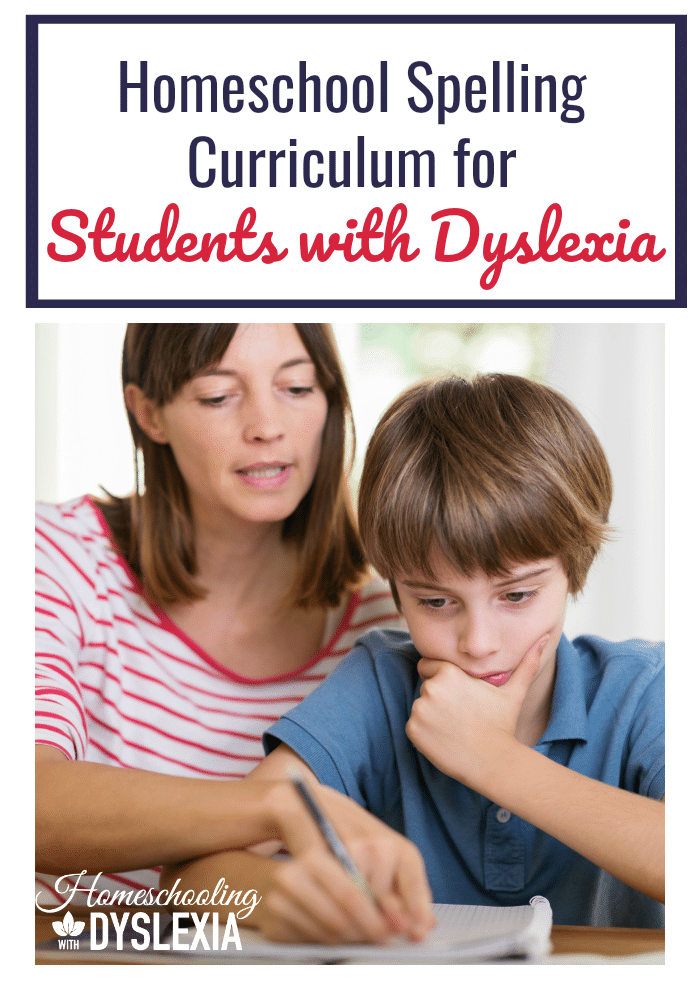
If you have been homeschooling a child with dyslexia for any length of time, you may have noticed something frustrating. Your child is making progress in reading, but their spelling still seems to be all over the place. This is incredibly common.
In fact, one of the most important things for parents of kids with dyslexia to understand is that spelling often develops much more slowly than reading. A child may be able to read a word correctly long before they can spell that same word independently.
The good news is that kids with dyslexia can learn to spell. They simply need the right kind of instruction, plenty of review, and realistic expectations about how long mastery may take.
In this post, we'll look at what makes a spelling curriculum dyslexia-friendly and some of the best homeschool spelling programs available today.
Why Is Spelling So Hard for Kids With Dyslexia?
Reading and spelling are closely related, but they are not exactly the same skill.
When your child reads a word, they see the letters and need to connect those letters to sounds. When they spell a word, they have to hear the sounds, remember the correct spelling patterns, and retrieve the right letters in the right order.
Spelling can actually be the harder task.
Think about the long /e/ sound. If your child sees the word feet, recognizing that "ee" represents the long /e/ sound may be enough to read it.
But if you ask your child to spell a word containing the long /e/ sound, they need to remember whether that sound is spelled with ee, ea, e, ie, ei, y, or another spelling pattern.
For a child who struggles with phonological processing, working memory, or remembering orthographic patterns, that is a much more demanding task. This is why a child can become a fairly competent reader and still struggle significantly with spelling.
If you have been wondering about this in your own child, read Why Spelling Progress Can Lag Behind Reading Progress
What Makes a Good Spelling Curriculum for Dyslexia?
Effective spelling instruction for students with dyslexia should follow the principles of Structured Literacy.
You may also be familiar with the term Orton-Gillingham. Orton-Gillingham has influenced many of the structured, systematic approaches used to teach students with dyslexia today.
You can learn more about what the Orton-Gillingham approach is and why it works for kids with dyslexia.
A good dyslexia-friendly spelling program should be:
Explicit
Spelling patterns and rules should be directly taught rather than expecting children to figure them out through exposure.
Our kids need to know not just that a word is spelled a certain way, but why.
Systematic and Sequential
Instruction should begin with foundational skills and gradually move into more complex spelling patterns.
Each new concept should build on something the child has already learned.
Cumulative
Kids with dyslexia need lots of review before spelling patterns become automatic.
A good program continually brings previously learned material back into lessons rather than teaching a rule once and moving on.
Multisensory
Using letter tiles, saying sounds aloud, writing words, tapping or segmenting sounds, and manipulating word parts can help strengthen learning.
Not every lesson needs to be elaborate or complicated. The goal is simply to involve multiple pathways while your child is learning. This helps kids remember better and keeps kids engaged.
Focused on the Structure of Language
Good spelling instruction goes beyond memorizing weekly word lists.
Students should learn about:
- phonology, or the sounds in words
- orthography, or how those sounds are represented in writing
- syllable types and spelling patterns
- morphology, including roots, prefixes, and suffixes
- etymology, or where words come from
Understanding how English works makes spelling much more logical.
Don't Forget Morphology
As kids get older, morphology becomes increasingly important. Morphology is the study of meaningful parts of words, such as prefixes, suffixes, bases, and roots.
For example, understanding the relationship between words like sign, signal, and signature can help students understand spellings that may seem strange if they are only sounding words out.
Instead of memorizing thousands of individual words, students begin recognizing patterns and connections between words.
This is one reason I teach morphology and etymology in my Teaching Spelling: From Remediation to Accommodation class.
Should Reading and Spelling Be Taught Together?
Traditionally, Orton-Gillingham instruction teaches decoding, or reading, and encoding, or spelling, together. Many excellent dyslexia reading programs still follow this model. However, there is another approach that can work particularly well for homeschoolers: teaching reading and spelling separately. There are advantages to both.
Programs That Teach Reading and Spelling Together
Programs such as Barton Reading & Spelling and Logic of English integrate spelling directly into reading instruction. This can be very effective because students are learning how the same language structures work in both directions.
Programs That Separate Reading and Spelling
All About Reading and All About Spelling take a different approach. Reading and spelling are taught in separate programs.
I actually really like this approach for many kids with dyslexia because spelling usually develops more slowly than reading.
A child may be ready to move on to more advanced reading skills while still needing extensive practice with earlier spelling concepts. Separating the two allows your child to continue progressing in reading without waiting for spelling to catch up.
Neither approach is necessarily better. The important thing is finding the approach that works best for your child and your homeschool.
Best Homeschool Spelling Curriculum for Dyslexia
Here are several spelling programs I recommend considering for students with dyslexia.
All About Spelling
All About Spelling is one of my favorite stand-alone spelling programs for homeschoolers. It uses explicit, sequential instruction and teaches spelling through phonograms, rules, word analysis, dictation, and lots of review.
Lessons are lightly scripted, which makes the program easy for parents to teach even if they have no previous training in dyslexia or reading instruction. Students use letter tiles and other hands-on methods while learning to segment words and apply spelling rules.
One of the biggest advantages of All About Spelling is that it can be used independently of your child's reading level. It is recommended to start All About Spelling level 1 when your child begins All About Reading level 2. The extra benefit of this is that your kids are reviewing what they learned in All About Reading level one!
Consider All About Spelling if:
- you want a stand-alone spelling program
- your child is progressing more quickly in reading than spelling
- you want something open-and-go and parent-friendly
- your child benefits from hands-on instruction and lots of review
Logic of English
Logic of English teaches reading and spelling together.
Their Foundations program is designed for beginning readers and includes phonemic awareness, phonograms, handwriting, reading, and spelling. Spelling analysis is built directly into the program. Students learn to use phonograms and spelling rules to both read and spell words.
For older students, Logic of English Essentials offers more advanced instruction and can be particularly useful for students who read reasonably well but continue to struggle with spelling. I also like that Logic of English incorporates morphology, including prefixes, suffixes, and roots, as students advance.
Consider Logic of English if:
- you want one program for reading and spelling
- your child enjoys games and varied activities
- you want strong instruction in the structure of English
- you are teaching a younger struggling reader or an older student with lingering spelling weaknesses
You can also read my comparison of Orton-Gillingham reading programs for homeschoolers for more information about Logic of English.
Barton Reading & Spelling System
Barton Reading & Spelling is an intensive reading and spelling program designed specifically for students with dyslexia and other language-based learning difficulties.
Reading and spelling are taught together using explicit, systematic, multisensory instruction. Barton is designed to be used one-on-one and can be used with children, teenagers, and adults.
It does require a larger investment of both time and money.
Consider Barton if:
- your child has moderate to profound dyslexia
- previous reading programs have not resulted in enough progress
- you want an intensive reading and spelling intervention
- you are willing to commit to consistent one-on-one instruction
Nessy Reading and Spelling
Nessy Reading and Spelling is an online Structured Literacy program primarily designed for children ages 6 to 11, although older struggling students may also benefit.
The program begins with an assessment and creates an individualized learning path. It teaches phonological awareness, phonics, spelling, morphology, vocabulary, fluency, and comprehension.
Nessy uses videos and games, which can make it especially appealing to children who resist more traditional lessons.
I generally view programs like Nessy as particularly useful for additional instruction and practice. Depending on the severity of your child's dyslexia, you may still want direct one-on-one instruction from a parent or tutor.
Consider Nessy if:
- your child enjoys computer-based learning
- you want additional independent reading and spelling practice
- your child needs extra repetition without another parent-led lesson
- you are looking for a supplemental Structured Literacy resource
Sequential Spelling
Sequential Spelling takes a somewhat different approach.
Rather than focusing heavily on memorizing spelling rules, students work with families of related words and gradually build longer words from familiar patterns.
Some families really like its simplicity. t can also be useful when a student strongly resists a more traditional spelling program or when you are teaching several children at different ages.
I would not necessarily place Sequential Spelling in the same category as a comprehensive Structured Literacy intervention such as Barton or Logic of English, but it can still be a helpful spelling resource for some learners.
What About Reading Horizons?
Reading Horizons has long been another program I have recommended for struggling readers. It is an online Orton-Gillingham-based reading program teaches decoding and spelling patterns systematically and can be especially useful for older struggling readers because the materials do not feel childish.
You can read more about Reading Horizons and other programs in my comparison of Orton-Gillingham reading programs.
Which Spelling Program Is Best?
There isn't one spelling curriculum that is best for every child with dyslexia.
Consider:
- your child's age
- the severity of their dyslexia
- whether they still need reading remediation
- how independent they are
- whether they enjoy hands-on or computer-based learning
- how much time you have available to teach
- whether you want reading and spelling combined or taught separately
A child who is reading well but whose spelling is far behind may benefit from a stand-alone program such as All About Spelling.
And a child who desperately needs a break from parent-led instruction may enjoy getting some additional practice through Nessy.
The important thing is to understand what your child needs and choose a program that addresses those needs.
Tips for Teaching Spelling to Kids With Dyslexia
Whichever curriculum you choose, a few principles can make spelling instruction much more successful.
Be Consistent
Short, frequent lessons are usually more helpful than one long spelling lesson once or twice a week. Regular exposure helps spelling patterns gradually become more automatic.
Be Flexible
You do not have to finish an entire curriculum lesson in one sitting. If your child is becoming fatigued or overwhelmed, stop. Continue the lesson the next day.
It is far better to spend 15 productive minutes learning than 45 minutes fighting over spelling.
Review More Than You Think You Need To
Kids with dyslexia often require significantly more repetition before a spelling pattern becomes automatic.
This is normal. Needing more practice does not mean that your child isn't learning.
Use Dictation
Dictation requires students to retrieve spelling patterns instead of simply recognizing them. Start with individual words and gradually move into phrases and sentences.
Teach the "Why"
Rather than simply correcting a misspelled word, help your child understand the pattern behind it. Over time, this develops a much deeper understanding of the English language.
When Should You Use Accommodations for Spelling?
One of the biggest mistakes I see parents make is resisting the use of accommodations.
Remediation and accommodations can happen at the same time.
We can continue explicitly teaching spelling while also allowing our kids to use:
- spellcheck
- predictive text
- speech-to-text
- electronic dictionaries
- word banks
- typing rather than handwriting
These tools allow kids to communicate what they know without their spelling difficulties constantly getting in the way.
This becomes especially important as children get older and the academic demands of writing increase.
For more ideas, read my posts about teaching spelling to kids with dyslexia and using assistive technology with struggling learners.
Keep Spelling in Perspective
Spelling is important, but it is only one part of literacy.
Some kids with dyslexia will eventually become very strong spellers. Others may always need to stop and think about spelling or rely on technology for support.
Both can become capable readers, writers, students, and adults.
Our goal is not simply perfect spelling. Our goal is to help our kids understand how language works, give them the tools they need to communicate effectively, and build the confidence to use those tools.
Continue providing explicit instruction. Keep reviewing. Teach morphology. Use accommodations when they are helpful. And remember that spelling progress may not look the same as reading progress.
Sometimes the reading takes off first. The spelling may simply need more time.
Want to Learn More About Teaching Spelling?
If you want to better understand why kids with dyslexia struggle with spelling and exactly how to help, my Teaching Spelling class covers:
- why people with dyslexia struggle with spelling
- effective methods for teaching spelling
- morphology and etymology
- simple ways to teach morphology
- accommodations for struggling spellers
- balancing remediation with accommodations
Learn more about Teaching Spelling: From Remediation to Accommodation.
You may also enjoy:
How to Teach Spelling to Kids With Dyslexia
A Comparison of Orton-Gillingham Reading Programs for Homeschoolers
Why Spelling Progress Can Lag Behind Reading Progress
What spelling program has worked well for your child? Share your experience in the comments below.
For more information on specific strategies to teach spelling to your dyslexic child the way he or she learns, consider taking our 'Teaching Spelling' Class.
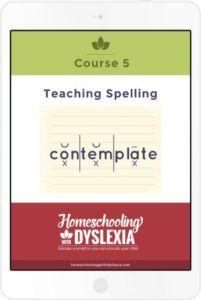
What you will learn in this class:
- why people with dyslexia struggle with spelling
- the best methods for teaching spelling
- the power of studying morphology and etymology with your dyslexic students
- 3 simple ways to teach morphology to your students
- the best accommodations for students with dyslexia
- how to balance accommodations with remediation
Connect With Us!
This site was created to be a place for families who chose to homeschool their dyslexic kids to share there successes and failures and to offer encouragement to one another. Please consider dropping by the Homeschooling With Dyslexia Facebook Page and being a part of our community!
How about you? Do you have a favorite spelling program in your homeschool? Please share in the comments below!


We use Susan Barton’s program and have had tremendous success. It is based on Orton-Gillingham as well.
Help!!!! I am going to be homeschooling my 2 children next school year (4 th and 2nd grade), I’m not sure if either of them are dyslexic both struggle with reading( skipping over words, leaving the ending off of words and adding endings to words that are not there, “b and d” also give them trouble in writing. One has been diagnosed with adhd and the other is being tested. The youngest has speech issues and seen a speech therapist at public school but was determined to not need therapy because she will correct herself when she is given the correct sound of words. I have no idea what cirriculum to get, any suggestions? Thanks!
Hi Christy,
Here is a link to a post I wrote recently on curriculum choices for 1-3rd grades. https://dev.homeschoolingwithdyslexia.com/homeschooling-kids-dyslexia-grades-1-3/
Many of these curricula will work well for a fourth grader as well.
They definitely exhibit some signs of dyslexia, however, these curricula will work with a child without dyslexia as well. They are more hands-on and multisensory than most other curricula which is why they were chosen. Hope this helps!
I hope you can help…. my son is 37 years old… divorce , and unemployed because of Dyslexia. He cannot find a job because of this problem. Please .. I Pray that you can change his Life and give him a chance in Life . Because of this problem he is depressed and has a very low self-esteem. Please Help him. Thank you so much …mom Trudy
Trudy, I just noticed your comment about your dyslexic adult son. Please contact a local community college and see if they offer developmental academics and vocational programs that can help him academically and help him learn job skills.
There are academic programs also https://www.readinghorizons.com/dyslexia/dyslexia-interventions/helping-adults-with-dyslexia
I hope that you son will find new hope and opportunities. Georgia
I love All About Spelling!!! So consistent.
Can All About Spelling be used in the classroom? My son’s teacher is open to using a spelling program that works for a dyslexic student. Is it a workbook? He will be receiving tutoring for reading (I’m sure it will include spelling) but she’s willing to implement a spelling program at school.
Thank you!!
I’m sure it could be adapted for in class. She may need to make alphabet cards for each child to spell the words with.
I am finding a measure of success with the spelling program from AVKO. (Sequential Spelling). I also give my dyslexic son his alphabet written out in block letters (by me) to look at to find the sound he’s trying to write. This alone has given him access to way more letters/sounds. It’s pretty great to see him doing so much better. My non-dyslexic son is flying through this curriculum as well! Verdict: dyslexic or non-dyslexic, we like this program.