Comparison can creep into homeschooling when we least expect it. You can know that your child with dyslexia or ADHD needs a different approach to learning. You can see that your individualized homeschool is working. You can even have years of evidence that your child is growing and thriving.
And then you see what another homeschool family is doing.
Suddenly, you wonder:
Am I doing enough?
Is my child falling behind?
Should our homeschool look more like theirs?
For parents homeschooling kids with dyslexia, ADHD, or other learning differences, comparison can be especially painful. But I've come to believe that sometimes we aren't simply comparing ourselves to other homeschoolers.
We're comparing our homeschool to a traditional model of education that we've unconsciously accepted as the standard.
And that can cause us to question an education that is actually working beautifully for our kids.
Prefer to listen? Listen to this episode of the Beyond the Box Learning podcast below.
When a Successful Homeschool Mom Starts Feeling Like She's Failing
Recently, I was talking with a homeschool mom I've worked with through one-on-one consultations and mentoring for about seven years.
She's an excellent homeschooler.
Over the years, I've watched her learn to step outside the box and provide her children with the individualized education they need. Her kids are doing exceptionally well.
But she scheduled a consultation with me because she was struggling with almost debilitating feelings of comparison.
A homeschool friend had told her about a well-regarded two-day-a-week program her children would be attending. It sounded wonderful. The program incorporated art into the academic subjects and offered the kind of organized homeschool opportunity many of us would love to give our kids.
And suddenly my friend felt less than.
Maybe she wasn't doing enough.
Maybe these other children were getting opportunities her children weren't getting.
But there was a huge problem with that comparison:
She knew her own children wouldn't thrive in that program.
Even more importantly, she had abundant evidence that what she was already doing was working.
A son she once feared might never learn to read now loves to read.
A child who experienced painful school trauma when he was younger has grown into a confident and emotionally mature young person.
Her children are thriving with the individualized education she's worked so hard to create.
So why could someone else's homeschool choices make her feel as though she was failing?
Homeschool Comparison Is Usually Based on Assumptions
One of the first things we talked about was how little we actually know about another family's circumstances.
Perhaps this other mom is absolutely thrilled about the two-day program.
But perhaps she's exhausted.
Maybe she's working and needs additional help.
Maybe someone in the family is ill.
Maybe her children are resisting schoolwork at home.
Maybe family relationships are strained.
Maybe she's simply reached a season in which having someone else handle school two days a week is exactly what her family needs.
We see one piece of another family's life and create the rest of the story ourselves.
We assume their children are thriving.
We assume their homeschool is more exciting.
We assume that mom has figured out something we haven't.
We assume their children are getting opportunities ours are missing.
And then we compare the complicated reality inside our own homes to the tiny glimpse we've been given of someone else's.
Why Traditional School Still Feels Like the Standard
As we continued talking, though, I realized something deeper was happening.
My friend wasn't only comparing herself to another homeschool mom.
She was comparing her homeschool to traditional school.
Think about it.
Most of us spent at least13 years learning what education is "supposed" to look like.
There are teachers.
Classes.
Textbooks.
Assignments.
Tests.
Grade levels.
Schedules.
Groups of children approximately the same age learning approximately the same things at approximately the same pace.
We may consciously understand that this model doesn't work well for our child with dyslexia or ADHD.
But somewhere deep inside, we can still believe:
Isn't that what real education is supposed to look like?
I remember experiencing this myself.
I would see wonderful homeschool classes, co-ops, and academic opportunities and wish my kids could participate.
But often the workload was too heavy.
The reading demands were too high.
The pace was too fast.
The environment required more sustained attention than some of my kids could manage.
And suddenly our read-alouds, documentaries, field trips, audiobooks, conversations, accommodations, and interest-led learning could feel somehow less legitimate.
Not because those things were less educational.
Because they looked less like school.
That's an important distinction.
Dyslexia Forced Me to Rethink What Education Really Is
I was a traditional learner myself.
Traditional education worked pretty well for me. If the same methods had worked for all of my children, I probably would have happily used them.
But they didn't.
My kids were smart and creative, but many traditional learning methods didn't allow those abilities to shine.
Textbooks could be too difficult to read, too long, or simply too boring.
The traditional pace didn't fit.
So eventually I had to step back and ask a much bigger question:
What is education actually for?
I knew my children could learn. I simply needed to find methods that allowed them to learn at the appropriate level without being constantly limited by their areas of weakness.
So we read living books aloud.
We visited museums and historical sites.
We watched documentaries and movies.
We had deep discussions.
We followed interests.
We accommodated learning difficulties while continuing to expose our kids to rich ideas and experiences.
And eventually I realized something:
This wasn't an inferior version of education.
In many ways, it was better.
What We Want for Our Homeschool vs. What Our Kids Need
Sometimes there's a difference between the homeschool we want and the homeschool our child needs.
We may want our child to participate in the beautiful co-op.
The rigorous literature class.
The exciting science program.
The popular homeschool group.
The class all their friends are taking.
There's nothing wrong with wanting those opportunities.
But we need to ask a different question:
Would this actually help my child thrive?
What I want my child's education to look like and what my child actually needs may be two entirely different things.
Recognizing that isn't settling for less.
It's doing the hard work of educating the actual child in front of you.
Where Is the Award for Individualized Homeschooling?
There's another reason comparison can be difficult for homeschool parents.
Traditional education constantly provides external measurements of success.
You get an A.
You make the honor roll.
You're reading "at grade level."
You win the science fair.
You get placed in the advanced class.
You graduate with honors.
But individualized homeschooling—especially homeschooling children with dyslexia or ADHD—can remove many of those external measurements.
So how do we know we're doing a good job?
Where is our homeschool award?
Where's the certificate that says:
Your severely dyslexic child finally believes he's intelligent.
Where's the honor roll for:
Your child who hated reading now voluntarily picks up a book.
Who's handing out medals because:
Your anxious child finally feels safe enough to learn again.
And where are the standardized tests for curiosity?
Creativity?
Emotional maturity?
Compassion?
Confidence?
The ability to have a thoughtful conversation?
The ability to spend hours learning about something simply because it fascinates you?
Traditional education measures what traditional education values.
Those aren't the only things worth valuing.
If I measured my friend's homeschool according to what actually mattered for her children, she wasn't losing some imaginary homeschool competition.
She was knocking it out of the park.
What to Do When Homeschool Comparison Hits
The next time another homeschool family makes you question what you're doing, don't immediately change your curriculum or sign your children up for something new.
First, question the comparison.
What am I assuming about this other family?
Do I actually know how things are going for them, or am I filling in the blanks?
Then ask:
What am I really comparing?
Am I comparing my homeschool to what my child actually needs?
Or am I comparing it to an old picture in my head of what education is supposed to look like?
Consider these questions:
- Would this curriculum, class, schedule, or program actually work for my child?
- What are my child's strengths?
- Where are they struggling right now?
- How does my child learn best?
- What interests them?
- What evidence do I already have that my child is growing?
- What does this particular child need from education right now?
One of the best antidotes to homeschool comparison is clarity.
The better you understand your child—and the more clearly you understand why you're making the educational choices you're making—the less power someone else's homeschool has to make you question yours.
Stop Looking Sideways and Look at Your Child
When comparison makes you start looking sideways at everyone else's homeschool, turn your attention back toward the child in front of you.
Who are they?
What are they good at?
What lights them up?
What frustrates them?
How do they learn best?
What helps them when they're struggling?
What are they proud of?
What would they happily spend hours learning about?
Those answers will tell you far more about what your homeschool should look like than another family's curriculum choices ever will.
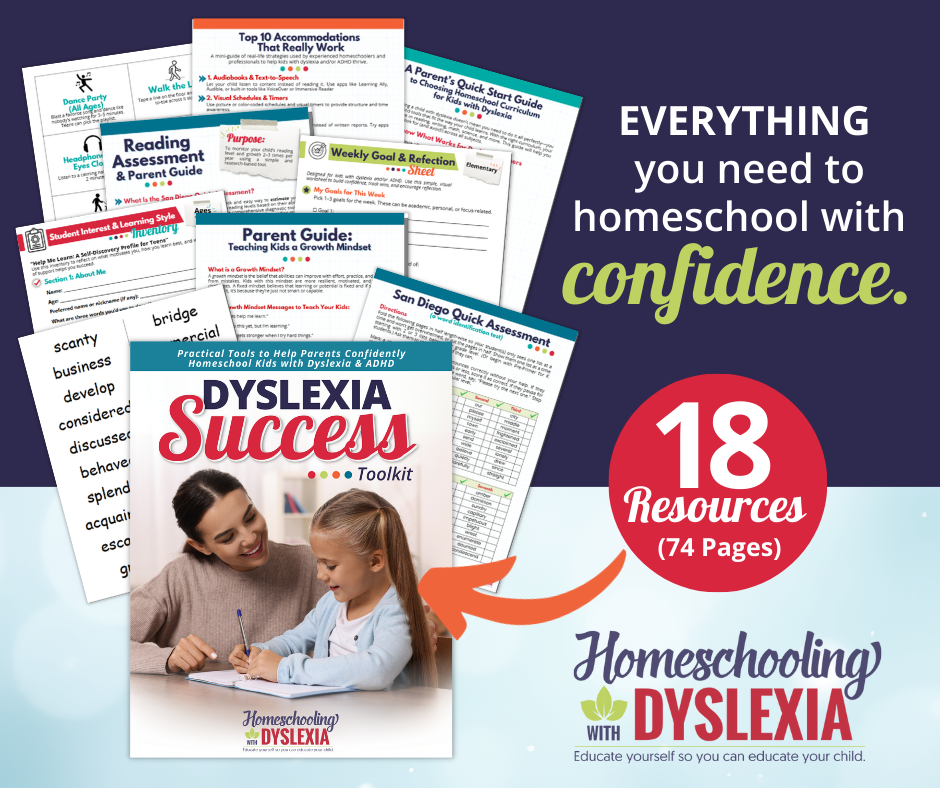
Free Student Interest & Learning Style Inventory
I've created a Student Interest & Learning Style Inventory to help you have exactly this kind of conversation with your child.
There are versions for younger children and teens, with questions designed to help you discover what interests them, how they prefer to learn, what's frustrating them, what support helps them, what they're naturally good at, and what they'd like to learn more about.
Use it as an opportunity to stop evaluating your child against everyone else and simply get to know your child better.
Then ask yourself:
How can I build an education that better reflects what I've learned?
[DOWNLOAD THE FREE STUDENT INTEREST & LEARNING STYLE INVENTORY]
Your Homeschool Doesn't Have to Look Like School
Your homeschool doesn't need to look impressive from the outside.
It needs to work for the children living inside your home.
There is no award for creating the homeschool that looks most like traditional school. And there is no prize for keeping up with what everybody else is doing.
Instead, look at the evidence in front of you.
Is your child growing?
Are they learning?
Are they becoming more confident?
Are they discovering their strengths?
Are you supporting the areas that are difficult while giving them room to become more fully who they were created to be?
Those things can be much harder to measure than grades, test scores, and grade levels.
But they matter.
So the next time comparison whispers that somebody else is doing it better, don't immediately start changing your homeschool.
Look at your child.
Remember why you've made the choices you've made.
And keep building the education they need.
Because kids who learn differently need to be taught differently.


This was SO encouraging and spot on. “What I want my child’s education to look like and what my child actually needs may be two entirely different things.” I came to that conclusion the end of last the last school year. We are trying something new for both of us this school year and, so far, miraculous success. He’s a different person this time around and I’m amazed!!!!!
I love it!! Thanks for commenting!