Every October, we celebrate Dyslexia Awareness Month — a time to shine a light on the 1 in 5 kids who learn differently.
But after nearly three decades of homeschooling eight kids (seven with dyslexia!) and mentoring thousands of parents, I’ve learned that awareness alone isn’t enough.
What parents really need is understanding — and a plan for helping their kids thrive.
So today, I’m sharing 10 things most parents don’t know about dyslexia (but should).

1. Dyslexia Has Nothing to Do With Intelligence
One of the most confusing things about dyslexia is the gap between what a child understands and what they can demonstrate through reading and writing.
Many kids with dyslexia are exceptionally curious, articulate, creative, or talented at solving complicated problems, yet struggle to remember basic spelling patterns or read a simple paragraph.
That's because dyslexia affects the development of accurate and fluent word-reading and spelling skills. It is not a reflection of intelligence, motivation, or potential.
One of the most important things parents can do is separate their child's intellectual abilities from their academic struggles. Continue challenging their minds with interesting books on audio, meaningful conversations, hands-on projects, and opportunities to explore their interests, even while they're still learning to read.
2. Early Struggles Don’t Mean Lifelong Struggles
Early intervention is important, but it's never too late to make meaningful progress.
Children with dyslexia typically need explicit, systematic instruction in foundational reading and spelling skills, along with plenty of guided practice and review. And because dyslexia varies in severity, progress can look very different from one child to another.
Some children learn to read relatively quickly with appropriate instruction. Others need years of consistent support. Slow progress doesn't necessarily mean your child isn't learning.
I've seen children make tremendous gains after years of struggling. The important thing is to provide effective instruction, monitor progress, and adjust when necessary rather than assuming a child will simply outgrow dyslexia.
Related reading: Teaching Kids With Dyslexia to Read: What Progress Really Looks Like
3. Dyslexia Isn’t a Vision Problem
One of the most common misconceptions about dyslexia is that it is caused by problems with vision or that children with dyslexia see letters and words backward.
While some children with dyslexia do reverse letters, especially when they're young, dyslexia is primarily a language-based learning difference, not a vision problem.
The underlying difficulty is how the brain processes the sounds in spoken language and connects those sounds to written letters and words. This helps explain why children with dyslexia may struggle to sound out unfamiliar words, remember spelling patterns, or develop fluent reading skills, even when their eyesight is perfectly normal.
It's important to understand this distinction because effective treatment for dyslexia focuses on teaching reading skills, not correcting vision.
Research supports explicit, systematic instruction in phonemic awareness, phonics, decoding, spelling, and other foundational literacy skills. Vision therapy, colored overlays, and tinted lenses have not been shown to treat dyslexia itself.
That doesn't mean vision problems should be ignored! Children with dyslexia can also have nearsightedness, difficulty focusing their eyes, or other vision-related conditions that make reading more uncomfortable. These concerns deserve appropriate evaluation and treatment, but they are separate from dyslexia.
The takeaway for parents: If your child is struggling to read, make sure their vision is checked, but don't assume that correcting a vision problem will resolve their reading difficulties. Understanding the language-based nature of dyslexia will help you choose instruction that addresses the actual challenges your child is facing.
4. Reading Programs Alone Aren’t Enough
Choosing a research-based reading program is important, but even the best curriculum can't replace a parent's understanding of how their child learns.
When you understand why your child has difficulty remembering phonograms, blending sounds, or reading fluently, you're better equipped to recognize when they need more review, a different explanation, additional practice, or a slower pace.
You also begin to recognize that progress isn't always linear. Some skills develop quickly while others require much more time.
The more we understand our children's learning differences, the better equipped we are to make effective teaching decisions.
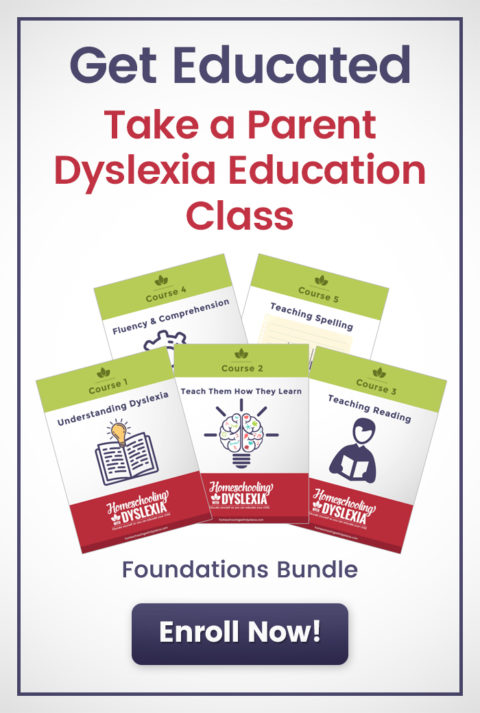
That's one of the reasons I created my Parent Education Courses. They combine research-based information about dyslexia and related learning challenges with practical teaching strategies from my decades of homeschooling children with learning differences.
5. Confidence is as Important as Curriculum
Many kids with dyslexia spend years feeling like they're not as smart or capable as other children. They see their friends reading chapter books while they're still struggling with basic words. They watch other kids complete assignments in minutes that take them an hour.
Over time, these experiences can affect how they see themselves.
One of the most powerful ways to build confidence is to teach our children about their dyslexia. When kids understand why reading and writing are harder for them, they're less likely to interpret those struggles as a sign that they're not smart or capable. They can begin recognizing their strengths, understanding their challenges, and learning which strategies help them succeed.
As they grow, we can also teach them to advocate for themselves — to explain their learning differences, ask for accommodations, and communicate what they need to be successful. These are life skills that will serve them long after their homeschooling years are over.
For more practical help, read my posts on Building Confidence in Kids With Dyslexia and How to Teach Self-Advocacy to Kids With Dyslexia.
Help Your Child Understand Their Dyslexia and Build Confidence!
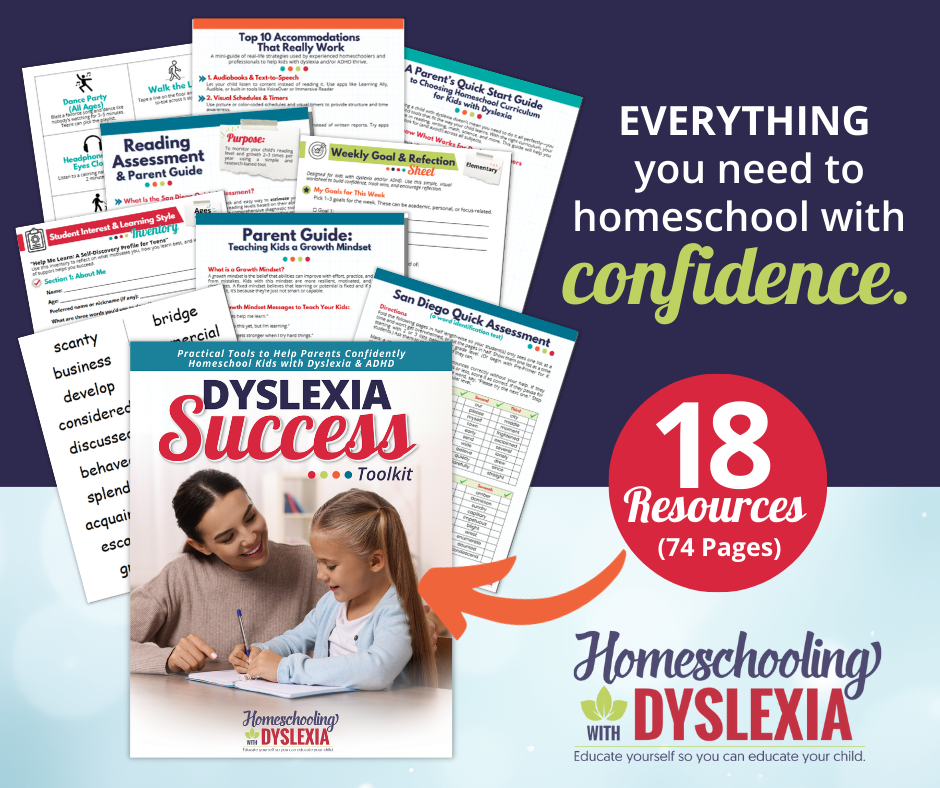
Not sure how to talk to your child about dyslexia? My Talking About Dyslexia: Conversations That Build Confidence and Understanding guide helps parents explain dyslexia in positive, age-appropriate ways. This 23-page downloadable resource includes conversation tips, activities to help kids recognize their strengths, and practical worksheets for developing self-awareness and self-advocacy skills. Help your child understand that dyslexia doesn't define their intelligence or limit their potential!
6. Dyslexia Often Overlaps With Other Learning Differences
Dyslexia rarely tells the whole story of a child's learning struggles. Many children with dyslexia also have ADHD, dysgraphia, dyscalculia, or challenges with working memory and executive functioning.
You might have a child who can explain a science concept beautifully but can't organize their thoughts into a written paragraph. Or a child who understands their math lesson but repeatedly forgets the steps needed to solve a problem.
Sometimes what looks like laziness, carelessness, or a lack of motivation is actually a child struggling with skills that haven't developed as easily as expected. Understanding these overlapping challenges helps us look beyond the behavior and identify what kind of support our children actually need.
Related reading: Homeschooling a Child With ADHD: What Parents Often Miss
7. Spelling, Writing, and Organization All Connect
Reading is only one part of the dyslexia picture. Many children continue struggling with spelling, written expression, and other academic skills even after their reading begins to improve.
Spelling, for example, can be particularly challenging because children must remember sounds, retrieve spelling patterns, and put them in the correct order without seeing the word in front of them.
Writing adds even more demands. A child may have excellent ideas but struggle to organize them, remember spelling conventions, form letters, and put everything on paper.
These skills often need their own targeted instruction and appropriate accommodations. Tools like speech-to-text, audiobooks, graphic organizers, and spelling assistance can help children work at their intellectual level while continuing to strengthen weaker skills.
Related reading: Spelling and Dyslexia: Why Can My Child Read a Word but Not Spell It?
8. Your Child's Future Success Is About More Than Academics
As homeschool parents, it's easy to become so focused on helping our kids overcome their academic struggles that we overlook the many other abilities and qualities that will contribute to their success in life.
And kids with dyslexia often have remarkable strengths that aren't easily measured by grades or standardized tests. Some are creative thinkers, natural problem-solvers, gifted storytellers, talented artists, skilled builders, or budding entrepreneurs. Of course, every child is different, but these strengths deserve just as much attention as their academic weaknesses.
One of the greatest advantages of homeschooling is that we have the freedom to build an education around our children's strengths and interests while providing the support they need in areas of weakness.
After homeschooling my own children with dyslexia and watching them grow into adulthood, I've come to appreciate just how important this balance is.
Research on successful adults with learning disabilities has identified six important attributes that contribute to success:
- Self-awareness
- Proactivity
- Perseverance
- Goal setting
- Effective support systems
- Emotional coping strategies
These are skills and attitudes we can intentionally nurture in our children, regardless of how easily academics come to them.
Yes, reading, writing, and math matter. But so do creativity, character, relationships, practical skills, and the ability to recognize and pursue your own strengths.
Our goal isn't simply to raise academically successful students. It's to raise capable, confident young adults who understand themselves, know how to overcome challenges, and are prepared to pursue meaningful lives.
For more encouragement, read How Important Is Academic Success? and Dyslexia Success: The 6 Success Attributes Your Kids Need and How to Teach Them.
9. Parents Are the Most Powerful Teachers
One of the most important lessons I've learned in over 30 years of homeschooling is that the more we educate ourselves about our children's learning differences, the more effective we become as their teachers.
You don't need to become a reading specialist or have a degree in special education to make a meaningful difference in your child's learning. But you do need to understand what makes learning difficult for your child and which teaching approaches are most likely to help.
When we understand dyslexia, ADHD, processing challenges, and executive function weaknesses, we're able to make better decisions about curriculum, instruction, accommodations, and expectations.
And something wonderful happens along the way.
We stop blaming ourselves for not doing enough. We stop assuming our kids aren't trying hard enough. And we begin to teach with greater understanding, patience, and confidence.
Educating yourself is one of the best investments you can make in your child's education.
10. Awareness Is the First Step — Action Is the Next
Dyslexia Awareness Month is a wonderful reminder to celebrate our kids’ unique strengths.
But the real change happens when awareness turns into action — when parents learn, adapt, and grow alongside their children.
One of the most important lessons I've learned in over 30 years of homeschooling is that the more we educate ourselves about our children's learning differences, the more effective we become as their teachers.
You don't need to become a reading specialist or have a degree in special education to make a meaningful difference in your child's learning. But you do need to understand what makes learning difficult for your child and which teaching approaches are most likely to help.
When we understand dyslexia, ADHD, processing challenges, and executive function weaknesses, we're able to make better decisions about curriculum, instruction, accommodations, and expectations.
And something wonderful happens along the way.
We stop blaming ourselves for not doing enough. We stop assuming our kids aren't trying hard enough. And we begin to teach with greater understanding, patience, and confidence.
Educating yourself is one of the best investments you can make in your child's education.
Get help homeschooling your smart but struggling learners.
I offer several ways to get the guidance you need to give your kids the education they really need.
Online, Parent Education Courses: I have a library of online courses to get you up to speed on understanding your child's learning differences as well as best ways to teach them right at home.
Group Mentoring: Super affordable. We meet twice a month.
1:1 Consulting: Work one-on-one with Marianne. Get your specific questions answered quickly and in a more in depth way.
Read One of my Books:
Dyslexia 101: Truths, Myths, and What Really Works: For families who are new to dyslexia and homeschooling.
What is Dyslexia? A Parents Guide to Teaching Kids About Dyslexia: For parents wondering how to talk to your kids about dyslexia.
No More School: Meeting the Educational Needs of Kids With Dyslexia and Language-Based Learning Difficulties: For parents who know their kids need a different kind of education but struggle stepping outside the box of traditional education.


0 Comments